
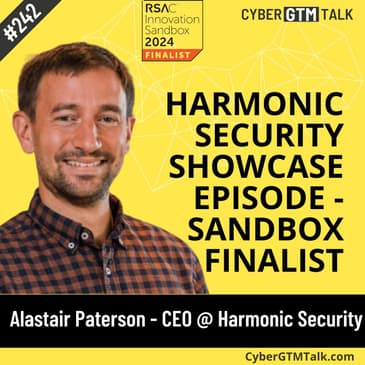
In this conversation we discuss:
👉 The inception and innovative mission behind Harmonic Security-
👉 How AI technologies are shaping data protection in cybersecurity.
About our guest:
Alastair Paterson is the co-founder and CEO of Harmonic Security and a seasoned entrepreneur in the cybersecurity arena. Having previously co-founded and led Digital Shadows, a company successfully sold to ReliaQuest, Alastair brings a wealth of experience and a pioneering approach to integrating AI with cybersecurity.
**For more insights:
- Connect with Alastair Paterson on [LinkedIn (https://linkedin.com/in/alastairpaterson
- Visit [Harmonic Security’s website](https://harmonicsecurity.com)
Follow me on LinkedIn for regular posts about growing your cybersecurity startup
Want to grow your revenue faster? Check out my consulting and training
Need ideas about how to grow your pipeline? Sign up for my newsletter.
[00:00:00] Hey, it's Andrew. And just quickly before we start this episode, I want to tell you about one of my
[00:00:04] favorite podcasts is the Bare Knuckles and Brass Tax podcast. Not only does it have a great name,
[00:00:11] it also has a really good format that's interesting. The two hosts are both named
[00:00:15] George. That's not what's interesting about it. It's that George K is on the vendor side
[00:00:21] and George A is a CISO on the customer side. And they have real conversations, sometimes with
[00:00:26] guests about the world of vendor customer interactions. They're not afraid to call out
[00:00:32] bad behavior on both sides and talk about the weird and wonderful nature of this world of ours
[00:00:37] in cybersecurity. Recent favors of mine are the one about building trust called taking a
[00:00:43] flamethrower to FOD and buzzword mumbo jumbo. And also the one with someone who's a field
[00:00:48] CISO and advisor to startups called how security buyers think and go-to-market
[00:00:53] strategies for young companies. I'm not getting paid for this promo. I just really enjoy the show
[00:00:58] that two George's put on. Check it out. It's the Bare Knuckles and Brass Tax podcast. Now on with this episode.
[00:01:15] Welcome to the Cybersecurity Go-To-Market podcast for a special showcase episode where
[00:01:20] we're talking to leaders of the company selected for the 2024 RSA Conference Innovation
[00:01:26] Sandbox. These are the very, very few, in fact 10 companies out of hundreds if not over a thousand
[00:01:33] people who entered who got selected by judges as having, as being the most innovative startups
[00:01:38] in cybersecurity today. I am your host Andrew Monaghan and today we're talking with Alistair Patterson,
[00:01:43] co-founder and CEO at Harmonic Security. Alistair, welcome to the podcast.
[00:01:48] Great to be here, Andrew. Thanks for having me.
[00:01:51] I'm looking forward to our conversation, Alistair. You are now a multi-time cybersecurity
[00:01:56] entrepreneur. You built, co-founded, ran with CEO of Digital Shadows which was sold to ReliaQuest,
[00:02:04] what? A couple of years ago now, three or four years ago now, is that right?
[00:02:07] Not even that long. Yeah, it's actually only July of 22. So relatively recent.
[00:02:12] Less than two years.
[00:02:13] Yeah, great run and thank you. It's a great company.
[00:02:17] Congrats on that whole run and that was incubated well and run and built up over time. You did it
[00:02:23] with your co-founder Brian who's your co-founder at Harmonic as well. I just love that you guys
[00:02:28] have worked together on two or three entities over the years.
[00:02:32] Yeah, we get back a long way probably around 20 years at this point. So yeah, he's always
[00:02:38] been an important part of what we've been able to achieve as a company last time around
[00:02:42] and obviously he's the heart of it again this time as CTO.
[00:02:46] The sharper listeners will have picked up that you're a fellow Brit like me. I'm obviously from
[00:02:52] Scotland. You were born and bred in England, is that right?
[00:02:55] Yeah, I grew up just north of London, a little town called Aylesbury in Buckinghamshire
[00:03:00] which is famous for not very much but yeah, it was a great place to leave and
[00:03:06] go elsewhere but yeah, no, I've been in the US now nine years but you wouldn't
[00:03:10] know it. I think I spend enough time talking to British people still that
[00:03:13] the accent has stayed intact.
[00:03:14] Yeah, I lost my accent very early on in the process. I don't know exactly why but I did
[00:03:20] but you've held onto yours quite nicely so congrats on that as well.
[00:03:24] Thank you.
[00:03:25] All right, so we sort of answered the first one a little bit but where in the world did
[00:03:29] you have your first sandbox, Alistair? Yeah, absolutely. I mean, I started out in
[00:03:34] the UK and I grew up there and also I started out working there too. Originally,
[00:03:40] there's a British company, Detica that has spawned a lot of actually other
[00:03:45] cybersecurity startups in the industry including, you know, QuantX here and
[00:03:48] Garrison and Tannas here and a few others but Digital Shadows was one of
[00:03:52] the first if not the first to come out of there and that was a great one for
[00:03:57] us as you mentioned over 11 years or so but yeah, that was really what took
[00:04:03] me to the US. I've been in the US since we did the Series A at Digital
[00:04:06] Shadows in 2015 and living in Silicon Valley ever since then.
[00:04:10] And what's the story of the founding of Harmonic?
[00:04:14] Yes, you mentioned my co-founder is the same CTO as last time, Brian. So
[00:04:20] Brian and I, in building Digital Shadows, it was really interesting to
[00:04:23] us. So for those who don't know, Digital Shadows was one of the leaders
[00:04:26] in the threat intel space and one of the things we did was look at all
[00:04:30] of the sensitive data that had leaked out of companies on the open internet
[00:04:34] and we were finding billions of records every week that were leaking out all
[00:04:38] types of sensitive data. So we'd already, you know, we've been
[00:04:40] discussing, you know, there's something not working very well in the data
[00:04:43] protection side of the house here and there's probably a company to do one
[00:04:46] day on that side of the house but then I think really the
[00:04:50] genesis came from ChatGPT coming out in this generative AI wave that
[00:04:54] shined a light again on data protection and we'll maybe come back
[00:04:58] to that a little bit later and what sort of problem we've decided to
[00:05:02] solve. But that was really, you know, those sort of seeds coming together
[00:05:05] was the start of the story.
[00:05:06] And was there a genesis moment where you were sitting there in the
[00:05:10] Keyser pub talking about this and just came to you that this is what
[00:05:13] to do or you run a campfire somewhere? What happened?
[00:05:16] Yeah, it's funny. I mean, just going back on Harmonic itself
[00:05:20] as a name, so there's sort of a couple of aspects to this. So
[00:05:24] when we're thinking of doing something new, we were thinking of
[00:05:27] fun company names and if you go far enough back, Brian and I
[00:05:31] actually played in a band together, so in our 20s. And so we
[00:05:35] started thinking, well, you know, it'd be pretty good to have a
[00:05:37] musical name of some sort. And we were actually in a place in
[00:05:41] San Francisco, Harmonic Brewing when we were discussing the
[00:05:45] company. So it isn't officially named after the brewery but
[00:05:48] we are actually having our RSA drinks in that brewery on
[00:05:51] Wednesday night of RSA. So I hope to see some people there
[00:05:55] and certainly a couple of their IPAs and a good discussion
[00:05:58] with part of their foundation for Harmonic Security this time
[00:06:01] around.
[00:06:01] Oh, I love that. I love that. Is that near the Moscone or are
[00:06:04] you taking people elsewhere around the city for a Sights
[00:06:07] and Sounds tour?
[00:06:08] It's walkable or less than five minutes in a car probably
[00:06:12] from there. So yeah, anyone who's interested to go to our
[00:06:14] website and drop us a note, we'll get you signed up.
[00:06:18] Love it. All right, let's talk about the problem then.
[00:06:20] What is the exact problem that you're looking to solve
[00:06:22] and who in an enterprise or a company that might buy it
[00:06:25] would care about this?
[00:06:26] Yeah, great question. I mean, I think as I mentioned, the
[00:06:29] start of this was really already thinking about huge
[00:06:32] issues in data protection and secondly seeing this just
[00:06:35] spotlight being put on it by the advent of this new
[00:06:38] gen.ai era because I think we've always had these
[00:06:42] challenges of sensitive data getting out of organizations
[00:06:45] and there's been a shadow IT issue. I think with the
[00:06:49] advent of these gen.ai tools, hugely positive of
[00:06:52] course, but the number one issue that we see in
[00:06:55] companies right now in terms of adopting gen.ai is
[00:06:57] concern for their data privacy and security because
[00:07:00] you suddenly got information, often really important IP
[00:07:04] and customer data and so on leaving the enterprise
[00:07:06] and going into these third party applications, some
[00:07:09] of which may be training on the data that's put
[00:07:11] into them according to their own declarations
[00:07:14] and some of them are obviously very early stage
[00:07:17] startups and companies that may not have much of a
[00:07:19] security policy that are now handling a lot of
[00:07:21] sensitive data. So in some respects, it's not really
[00:07:24] a new set of risks, but it's certainly putting a
[00:07:26] spotlight on those existing set of risks and the
[00:07:28] challenge is that the existing set of tools is
[00:07:30] just not up to the task. I mean we've spent 20
[00:07:33] years regex matching on social security numbers and
[00:07:36] credit cards trying to find sensitive data and
[00:07:38] I mean it's false positives everywhere and it's
[00:07:41] just looking at a tiny subset of what's actually
[00:07:44] sensitive about a company's data and it isn't able
[00:07:46] to identify much higher level concepts that
[00:07:50] companies care about in their IP and you know
[00:07:52] whether it's code or it's you know it's customer
[00:07:55] data and other types of information you can't just
[00:07:57] match simply on. So that's like solution one and
[00:08:01] the other approach the industry has been going
[00:08:03] with and polishing over the last few years is you
[00:08:05] know labeling and classifying all of your data
[00:08:07] and I think there's very few CSAs I speak to
[00:08:09] that relish the opportunity to do that. It tends
[00:08:12] to be a you know very challenging exercise to
[00:08:14] try and identify even where all your data is
[00:08:16] let alone label and classify it all and even if
[00:08:19] you did, it's going to be pretty tough to you
[00:08:21] know that alone won't spot bits of that information
[00:08:23] being copied into prompts or emails ultimately and
[00:08:27] other things like that. So we felt like there was
[00:08:29] room for something new like a completely different
[00:08:32] approach to solving this set of problems.
[00:08:34] You know the someone who used to sell DLP
[00:08:38] solutions back in the day, the dirty little
[00:08:40] secret about them is that very few were
[00:08:42] preventing and most people were just monitoring
[00:08:45] because it wasn't that confidence in the
[00:08:47] classification identification and then the policies
[00:08:50] to go with it and they sure as heck didn't want
[00:08:52] to block something which was mission critical or
[00:08:54] was related to a CFO trying to do his job.
[00:08:57] Yeah, it's sadly become a compliance tick box
[00:09:00] you know it's sort of running in the corner
[00:09:01] on this tiny subset of data is tuned to not
[00:09:04] really find anything great you know we can
[00:09:06] tick the box that we've got it but actually
[00:09:07] if you actually care about your data it's
[00:09:09] probably not a measure you're looking to deploy.
[00:09:11] So what is the big innovation Alistair in
[00:09:14] this whole world that you're talking about there
[00:09:15] that you say that's why we were selected for
[00:09:18] the sandbox?
[00:09:19] Yeah, I mean the first thing that we do at
[00:09:21] Harmonic is the straightforward bit which is
[00:09:23] really giving you visibility into AI adoption
[00:09:26] across the enterprise so which applications
[00:09:29] and models are in use and you know there's
[00:09:32] a positive in that right we want to be
[00:09:33] enabling the business to solve the problems
[00:09:36] that it needs to with AI but you also want
[00:09:39] to obviously identify the ones that are high
[00:09:40] risk and potentially are going to train on the
[00:09:42] data that's put into them and cause otherwise
[00:09:45] cause data protection concerns.
[00:09:46] So we you know we cover all of that and not
[00:09:48] just for the existing set of sort of new AI
[00:09:52] apps but existing SaaS apps that are
[00:09:55] deploying AI as part of the stack which
[00:09:57] pretty much every enterprise app is doing
[00:09:59] right now so we're covering all of those
[00:10:01] apps and a number of them are changing
[00:10:03] their terms and conditions now because of
[00:10:05] AI rollout so there's a really interesting
[00:10:08] challenge in vendor risk management around
[00:10:09] that so that that's like the part one but
[00:10:11] the really sort of innovative thing that
[00:10:13] we're doing is that we're building our own
[00:10:16] pre-trained data protection models to
[00:10:20] identify sensitive data way better than
[00:10:22] anything's done before. We're using a
[00:10:25] mixture of experts approach we have a
[00:10:26] combination of different models that are
[00:10:28] fantastic at spotting different types of
[00:10:30] sensitive data in the same way that a
[00:10:31] human would and you can imagine it as if
[00:10:33] you know it's like having a human
[00:10:35] looking at every piece of data going
[00:10:37] out of the business and be able to
[00:10:38] make a human-like judgment about what is
[00:10:40] and isn't sensitive and the really cool
[00:10:42] thing is you can configure us in the
[00:10:44] same way you would talk to a human
[00:10:45] about what matters to the business so
[00:10:47] you could be an investment firm and you
[00:10:49] can configure harmonic by saying well
[00:10:50] look I care about my investment committee
[00:10:52] memos and so and I don't want any of
[00:10:55] those leaking out and our models
[00:10:58] actually understand what an investment
[00:10:59] committee is they know what a memo is
[00:11:00] they know they know they don't have
[00:11:02] to have seen or been trained on your
[00:11:03] data and your memories to to know
[00:11:05] what one is when they see one just
[00:11:07] like you'd be able to or I would be
[00:11:08] able to spot those things for any
[00:11:10] company so the beauty is that we can
[00:11:12] you know without any complicated rules
[00:11:14] being set up or any you know having to
[00:11:15] train on your data or do anything like
[00:11:17] that we can actually identify what
[00:11:18] matters to you in terms of sensitive
[00:11:20] data leaving the business in a way
[00:11:22] that's just not been possible before
[00:11:24] so that's sort of core innovation
[00:11:25] and the reason we've been able to do
[00:11:27] this so well is really knowledge of
[00:11:28] previously leaked information it's the
[00:11:30] sort of os and thread intel
[00:11:32] background that we've got that gives
[00:11:33] us knowledge about how to build
[00:11:35] realistic training data sets that we
[00:11:37] can build and structure these models
[00:11:38] on top of so we have a bit of an
[00:11:39] unfair advantage with that thread
[00:11:41] intel background and the final thing
[00:11:43] that we do is that having identified
[00:11:45] something sensitive you're probably
[00:11:46] you know familiar having rolled out the
[00:11:48] lp that there tends to be a whole bunch
[00:11:49] of incidents they get fired at the
[00:11:50] security team you know it goes beep
[00:11:52] the security team have to go and look
[00:11:54] at it and figure out if it's
[00:11:54] something interesting or not and why it
[00:11:56] went beep and and it's usually oh
[00:11:59] great it was turns out mexican
[00:12:00] driving licenses looked like us
[00:12:02] social security numbers and you know
[00:12:03] if you had any kind of human
[00:12:04] contacts you'd know to ignore it
[00:12:06] straight away but but of course the
[00:12:08] systems don't you know are not smart
[00:12:09] enough to do that so the beauty of
[00:12:11] the harmonic approach i mean number
[00:12:12] one of course we're looking at this in
[00:12:14] a much more sophisticated way so when we
[00:12:16] find something it really is something
[00:12:18] of interest but beyond that we also
[00:12:19] know why we matched it you know we
[00:12:21] know that it's to do with an
[00:12:23] investment committee memo in my
[00:12:24] example some other piece of
[00:12:25] sensitive information and we have that
[00:12:28] that context we pull in identity
[00:12:29] information to help make good
[00:12:31] judgments about that too
[00:12:32] but that that allows us to then
[00:12:33] instead of fire the results of the
[00:12:35] security team we actually go to the
[00:12:36] end users directly and we can coach
[00:12:38] them in the right direction and say
[00:12:40] oh you know it looks like you're
[00:12:41] sending some PII out of the country to a
[00:12:45] you know a non-GDPR location or
[00:12:47] something like that if you have
[00:12:48] European customer data
[00:12:49] and the employee can say well actually
[00:12:51] this is this is perfectly
[00:12:53] fine in this case because i'm closing
[00:12:54] some business out there i need to send
[00:12:56] this proposal out it turns out it's
[00:12:58] it's valid loop in their boss on
[00:13:00] slack or teams who approves it
[00:13:02] and then the whole thing gets
[00:13:03] audited and logged and and goes
[00:13:05] through without the friction that
[00:13:06] you typically have of
[00:13:07] one leading the security team into
[00:13:09] blocking the end user
[00:13:10] so instead of this sort of once a year
[00:13:12] security awareness training we're
[00:13:13] actually effectively coaching users in
[00:13:15] the right direction on the job
[00:13:16] because most of them are you know
[00:13:17] they they obviously mean well and
[00:13:18] they're trying to just trying to get
[00:13:19] their job done and they don't want
[00:13:21] to get blocked by
[00:13:22] security in doing that so we're
[00:13:24] trying to be an enabler for this
[00:13:25] new AI revolution as a result
[00:13:27] and who are you finding is the main
[00:13:29] buyer of this because it touches lots
[00:13:31] of different groups inside
[00:13:32] inside an organization i would imagine
[00:13:34] yeah i mean it is interesting we're
[00:13:36] seeing um you know every
[00:13:38] organization is looking at AI right
[00:13:39] now of course and a lot of them
[00:13:40] are building steering committees and
[00:13:42] groups to look at it
[00:13:43] uh security is is usually a
[00:13:45] stakeholder and sometimes even runs and
[00:13:47] chairs those those groups but there's
[00:13:49] other other people involved whether
[00:13:50] it's compliance legal
[00:13:52] uh you know cto's office and so on
[00:13:54] um but typically we are selling to
[00:13:56] the security team and the cso
[00:13:59] initially because they tend to get
[00:14:00] given uh you know the task of
[00:14:02] actually solving
[00:14:03] the problems that are being thrown up
[00:14:05] here and deploying the right type of
[00:14:06] tooling and visibility
[00:14:08] so we help them get their arms
[00:14:09] around this problem with the
[00:14:10] visibility and then implement the
[00:14:11] right controls with the
[00:14:13] the gen ai models we're building for
[00:14:15] data protection so
[00:14:16] that's usually the the buyer center
[00:14:17] and it's the cso's team
[00:14:19] um the types of companies that are
[00:14:20] interested they tend to be the ones
[00:14:21] that are a little more
[00:14:22] forward leaning into AI so they're
[00:14:24] looking you know they're accelerating
[00:14:25] their their adoption but they they
[00:14:27] have sensitive data they're
[00:14:28] worrying about
[00:14:29] so they're fairly mature from a
[00:14:30] security perspective they don't want
[00:14:32] sensitive data
[00:14:33] leaking out but they want to lean
[00:14:34] into this AI revolution
[00:14:36] um right now we're not we're not
[00:14:37] necessarily trying to displace
[00:14:39] existing
[00:14:39] technologies we may we may go ahead and
[00:14:41] do that over time but right now we're
[00:14:43] looking for
[00:14:43] the the types of buyers that are
[00:14:45] early adopters and and are leaning
[00:14:47] into this wave and
[00:14:48] prepared to to look at something new
[00:14:50] in a totally different approach like
[00:14:51] harmonic
[00:14:52] and going back to what you're
[00:14:53] saying about accuracy have you been
[00:14:55] able to gather some data about how
[00:14:56] more accurate your way is versus the
[00:14:58] old regex
[00:14:59] kind of base based way yeah i i
[00:15:02] think so i i don't have any sort
[00:15:04] of stats to hand here but but i
[00:15:05] would say
[00:15:06] it's it's not only the accuracy
[00:15:07] piece which is hugely important but
[00:15:09] but it's the fact that we can open the
[00:15:11] aperture on what we can see
[00:15:13] way wider right so if you're the
[00:15:14] average enterprise and you've got d l
[00:15:16] p rolled out you're probably
[00:15:17] tracking a very small number of
[00:15:19] nicely typed
[00:15:20] date pieces of data that you can
[00:15:21] spot but you're not looking at you
[00:15:23] know your corporate strategy
[00:15:24] documents and hr and
[00:15:26] you know and m&a information and deal
[00:15:30] documents or
[00:15:31] you know one of our design
[00:15:32] partners for example is a lithium ion
[00:15:34] battery technology company
[00:15:36] so their ip is critical and anything to
[00:15:38] do with that
[00:15:39] going out is a major problem and you
[00:15:41] think about what the existing
[00:15:43] types of data protection technology
[00:15:44] offer you in trying to
[00:15:45] stop that that information leaving is
[00:15:47] pretty minimal right you can't
[00:15:49] nicely key off anything in that data
[00:15:51] but but of course
[00:15:52] in our case harmonic actually
[00:15:54] understands the concept of lithium ion
[00:15:56] battery
[00:15:56] you can write some very plain english
[00:15:58] ways of describing what you care
[00:16:00] about
[00:16:00] and then we can spot that on the
[00:16:01] way out in a way that
[00:16:03] nothing else could before so it is yes
[00:16:05] partly an accuracy leap because we're
[00:16:07] looking at it like a human word and
[00:16:08] we're not going to start throwing all
[00:16:10] these
[00:16:10] false positives over but the bigger
[00:16:12] piece is probably that we're actually a
[00:16:13] strategic
[00:16:13] tool here we can actually spot the
[00:16:15] things you care about not just the
[00:16:17] the sort of compliance tick box
[00:16:18] pieces got it all right what are your
[00:16:21] big plans for 2024
[00:16:23] yeah we're sort of exciting news for
[00:16:25] us is is we're just getting ready
[00:16:27] with the sort of general
[00:16:28] availability of harmonic we've been
[00:16:29] working with design partners
[00:16:31] who've been live since january on on
[00:16:33] the platform where we've been
[00:16:35] honing the product since then we've
[00:16:36] taken a very
[00:16:37] you know i guess customer first
[00:16:39] approach of just as soon as we had
[00:16:41] something we could push live we
[00:16:42] we went and took it to to the cso's
[00:16:45] and went live
[00:16:46] we've had over 50 cso conversations
[00:16:48] before we even
[00:16:49] started writing the code and building
[00:16:51] anything to make sure that we're
[00:16:52] building in the right way so
[00:16:53] in terms of if this year the goal
[00:16:55] is now getting from that design
[00:16:56] partner stage where we are today
[00:16:58] to to the point where we were at ga
[00:17:00] which is
[00:17:01] weeks away not months and then from
[00:17:04] there we'll be obviously bringing
[00:17:06] more and more customers on board and
[00:17:08] building out the platform more broadly
[00:17:10] than it is today cut and you
[00:17:12] mentioned the event you have during
[00:17:14] rsa what else do you have
[00:17:15] on during that week yeah i mean like
[00:17:18] everyone else i'll be pretty busy
[00:17:20] hanging out with
[00:17:21] with everyone being in town here yeah
[00:17:23] we've got a we've got a meeting
[00:17:25] room in in the mosconi on
[00:17:27] on the wednesday on the tuesday i've
[00:17:29] got the lucky to have some
[00:17:30] fantastic seed investors at 10 11 who
[00:17:32] are hosting us in a
[00:17:34] space next to the the mosconi as well
[00:17:36] on the tuesday so
[00:17:38] beyond that i'll probably be in the
[00:17:39] lobby of the four seasons with
[00:17:40] everyone else for a chunk of the show
[00:17:41] or or at the bar you know certainly
[00:17:43] harmonic brewing on the wednesday
[00:17:45] night
[00:17:45] yeah i love that and they can go to
[00:17:47] your website to sign up for the
[00:17:48] the brewing night
[00:17:50] that's right yeah anyone feel free
[00:17:51] to fill in the form on there and
[00:17:53] we'll look back to you imminently and
[00:17:55] if you'd like to find out more about
[00:17:56] harmonic you can request the demo
[00:17:58] as well
[00:17:58] that's awesome well listen that's a
[00:18:00] luck for the sandbox competition
[00:18:02] itself and of course
[00:18:03] you know for the rest of the year and
[00:18:04] beyond looking forward to seeing your
[00:18:06] success
[00:18:07] thanks and real pleasure catching up
[00:18:09] with you today
[00:18:22] it will mean a lot to me and to the
[00:18:24] continued growth of the show
[00:18:25] if you'd help get the word out so
[00:18:28] how do you do that easily there are
[00:18:29] two ways
[00:18:30] firstly just simply send a link to a
[00:18:33] friend
[00:18:34] send a link to the show to this
[00:18:35] episode
[00:18:37] you can email it text it slack it
[00:18:39] whatever works for you
[00:18:40] and it's easy for you the second
[00:18:42] way is to leave a super quick
[00:18:44] rating and sometimes that can seem
[00:18:46] complicated so i've made it as easy
[00:18:47] for you as i can
[00:18:49] you simply have to go to rate this
[00:18:51] podcast dot com slash cyber
[00:18:55] that's rate this podcast dot com
[00:18:57] slash cyber
[00:18:58] and explains exactly how to do it
[00:19:00] either of these ways will take you
[00:19:02] less than 30 seconds to do
[00:19:04] and it will mean the world to me so
[00:19:05] thank you