
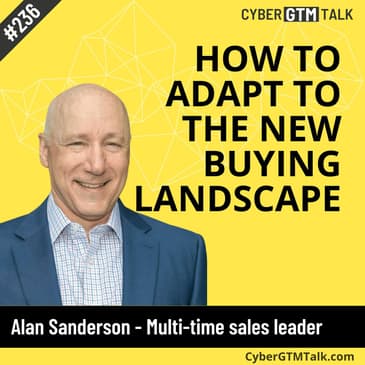
Summary
In this episode, Andrew interviews Alan Sanderson, a fractional sales leader with over 25 years of experience in software sales and sales leadership. They discuss the changing buyer's journey in the cybersecurity industry and the importance of an online presence. They also explore strategies for building personal pipelines, crafting value-based messages, and capturing and communicating business value. Additionally, they highlight the need for collaboration between sales and marketing teams and discuss how cybersecurity startups can stand out in a crowded market. The conversation explores various aspects of sales and marketing in the cybersecurity industry. It discusses the importance of getting attention in the market, the evolution of the market, the impact on sales teams, the changing buyer's journey, qualification and discovery, the emotional side of buying, and being disruptive in sales.
Takeaways
- Having someone in the organization who can be a loud and compelling voice is crucial for getting attention in the market.
- The success of a new approach or service often relies on the initial customers and evangelists who can vouch for its value.
- Sales teams need to adapt to the changing buyer's journey and the increased scrutiny on deals.
- Qualification and discovery are essential in understanding the customer's pain points and desired outcomes.
- Understanding the emotional impact of a solution and asking impactful questions can differentiate a seller and build credibility.
- Being disruptive in sales means asking tough questions and being different from other vendors.
The Cyber Go-To-Market Talk is the show for cybersecurity sales leaders, founders, CROs, and go-to-market operators looking to improve cyber sales performance and build more predictable revenue growth. Hosted by Andrew Monaghan, founder of Unstoppable.do, covering cyber sales leadership, revenue leadership, sales onboarding, forecasting, pipeline generation, and cybersecurity go-to-market execution.
Follow me on LinkedIn for regular posts about growing your cybersecurity startup
Want to grow your revenue faster? Check out my cybersecurity sales consulting and training
Need ideas about how to grow your pipeline? Sign up for my newsletter.
[00:00:00] Hey, it's Andrew just quickly before we start this episode I want to tell you about one of my favorite podcasts the breaking through in cybersecurity marketing podcast. Now I don't need to explain what it's all about because the name is so good but here's why I like it. Firstly, the host not only know what they're talking about because they've been in the cybersecurity marketing role for so long, but also Janet and Maria make it fun. They have personalities that come out in the podcast and it draws you in.
[00:00:30] And together to make super useful episodes my recent favorites were the one with Ross Halli-Lic who is a marketer but also just published the book cyber for builders all about how to start a cybersecurity company or the one with Joe Evangelisto, the Siso at Nets by or even the one all about telling stories and cybersecurity with Mitch Maine. I could go on with quite a few more.
[00:00:54] And by the way, I'm not getting paid for this. I just really enjoy Gianna and Maria's show. Check it out. It's the breaking through in cybersecurity marketing podcast now on with this episode.
[00:01:04] Two things that many cybersecurity companies in their sales teams are experiencing right now are it's really hard to get noticed by people and secondly, it's harder to get deals done.
[00:01:15] And if you look at one of the things that's the core of all this is the buyer's journey and how the interact with vendors has changed so much over the years. They do more research on their own before they talk to us but that's no good if they don't know about us and we're start up trying to make our mark in the world.
[00:01:31] And it's tough to get a rock solid justification together using our champions that hits the economic buyer the right time so that deal gets done.
[00:01:40] I talk about all this and what to do about this with longtime sales leader Alan Sanderson in this episode. So if you're looking for practical advice for yourself or for your sales team, don't go away.
[00:01:52] Welcome to the cybersecurity go to market talk podcast where we are seeking answers to the question. How can cybersecurity companies grow sales faster? I'm your host, Andrew Monahan our guest is Alan Sanderson is currently a fractional sales leader and someone who has over 25 years in software sales and sales leader.
[00:02:21] How and welcome to the podcast. Thank you Andrew and I appreciate you giving me the opportunity to speak today and connect with you. Yeah, this is going to be interesting. You know you've got a storied history long history in this world and cybersecurity other well known companies.
[00:02:37] I look at your background and I see companies I recognize such as absolute software, fire I VM where liquid machines and then going way back digital guardian, which I remember from way back to the day and I think it's probably been through a couple of name changes since then.
[00:02:51] But you know these are good storied cybersecurity companies got a long history in this world. Thank you yeah I mean, glinton for punishment or success. It's been more so on the successful side but I think we all know security can be a challenging area but a very valuable.
[00:03:06] In today's market overall you know it is and we have that luxury where for most anyway these days cybersecurity is a need not a want right they go do something they can.
[00:03:17] Not do anything so in the current climate or last couple of years let's say it's probably been a blessing that we're being cyber security but you know it's never easy this.
[00:03:26] We have our unique challenges in our market place is very crowded it's very noisy there's lots of people claiming things doing things it's all overlappin so we we got our own challenges and actually brings me on to the topic for our discussion today.
[00:03:38] You know being in sales as long as we have you know the people that we sold to and how they acted 20 or years ago is very different to how they do things now and this kind of phrase that you hear is the buyers journey has changed maybe slowly at times maybe quicker at times.
[00:03:55] I think certainly the last year year and a half is scrutiny on the buying side has changed a lot but you know when I say the buyers journey has changed what does that mean for you what's your experience.
[00:04:06] Yeah I mean so I look at I've been in the industry long enough to see how buyers and companies have evolved around looking at different technologies and definitely the presence of the online footprint has changed that dynamic you know a great deal
[00:04:22] and when you start to look at the buying journey and there are analysts that Gartner forest and others that write you know have written plenty of papers around this is that you know a lot of due diligence a lot of research has done well before speaking to you know a salesperson speaking to a vendor itself
[00:04:40] and you know with the multiple channels that are out there you know overall and how companies starting to look and how users are starting to look at you know solving technical or business problems they're leveraging things like websites and you know analyst information social media sites you know blog post is this is huge online presence that allows somebody to go through and research certain solutions sets to maybe solve a business problem that they have internally you know overall so the buyers themselves are doing their own business.
[00:05:09] They're doing their own homework well before you know speaking to a salesperson or vendor and you know if you look at some of the papers that have been written that can be done you know up to 60% of the buying journey you know can be covered you know by themselves before talking to a vendor overall and so this really means it as a seller as a seller or a company you know you really need to think about what you're messaging you know to the marketplace you know overall
[00:05:38] is the content available you know around that message and it's clear and precise and you know the company has a value proposition that can can tell somebody to look at them further you know overall packaging all that up and having an online presence you know around either your website analyst website you know white papers blog post articles customer success stories you know business and technical customer success stories are a big one also.
[00:06:08] I'm very much needed to get shortlisted you know into an opportunity with an organization to solve their business problem with the solution set or security solution set that you're offering to the marketplace and so what net net means is that you know executives marketing and sales teams really need to collaborate closely and have a succinct approach to you know offering information to the marketplace in various channels in the types of different content that can be available to them.
[00:06:37] I think that's the concept is you know people talk about a lot right but I think some nuances around which is where it gets super interesting and what you were saying there was you know all different channels to think about right now let's let's try make this a little bit more real.
[00:06:54] So let's go to our favorite cybersecurity startup cyber donut cyber donut series a type company they've got five to eight people in their sales team they got an S.E. or two maybe a BDR they got their early adopt the customers are on board now they're kind of got the next 10 or 15 as well but they're trying to get to let's say 50 75 customers and maybe get the ARR from a few million up to 10 millions there could
[00:07:17] in a unique spot right they probably somewhat found their their product market fit but it's probably not well defined it's a pretty little bit loose and they're in this morass of 3 700 vendors trying to make their mark right so this is the challenge right the no one's heard a cyber donut
[00:07:33] and there's just another company out there that's trying to pound the whatever is to get hold of people and get it if I'm sitting there as a sales leader let's say inside this company what what should I be telling my sales team they need to be doing themselves you know before we even get into how we collaborate with the martingere site sure sure so look at it as a sales leader you know I've always believed in you know sales reps need to build their own pipeline and look at there's a methodology around that in companies need to you have a strategy.
[00:08:03] You need to help fill pipeline and lead generation through marketing efforts you might have a channel organization it's a lot of small organizations don't start in the channel site which makes a lot of sense you know you want to penetrate the market directly overall but you need to have a sales organization that's hunting so as a sales leader you know a company that goes to market in my sales team and I've hired hunters that are going to go build their own pipeline it then goes into the company itself providing some sales tools you know they can be leveraged around campaign
[00:08:32] over all and leveraging those tools now I will still always go back to if you understand the buying journey as stated you know all of us today operate this way if I cold called you Andrew and you know I left you a voicemail the first thing you would do is if you're interested in talking to me you probably look me up on LinkedIn so you initially hit social media you know you hit a different avenue without even calling Alan Sanderson to learn about Alan Sanderson think that the same way as a seller
[00:09:02] is that if you're cold calling your emailing now before you probably get a response or can actually engage with somebody directly they're going to do some online research first and so it is you know 100% upon the sales team to build pipeline you know create sales opportunities but in today's world and today's market it is a necessity to have certain online information readily available to help close that gap
[00:09:28] and help peak the interest of the end user to return and engage you know in that sales call overall it's just a it's just a matter of the way it is today so I'm the seller then what should I be doing though right I mean the only thing I really have direct control over is what I put in the email are they voicemail or the call goes out and my LinkedIn profile I don't really control us on the website right so what do I do with my tools I have
[00:09:54] so when I was an individual contributor I work with multiple startups and I think some of the best sellers that are out there leverage their own network and so you know I sold something to an end user six months ago you don't have to use their name you can use an anonymous story but a seller should have their own contact I was going to say the word roll it except many of the people listening this part we have no clue what a roll it X is.
[00:10:18] You want to have your kind of listing you know of your own references value based stories discussions you know overall the other side of that look at as a seller your best sellers understand who they're calling the company they're calling and having a crafted idea of what the value props going to be that impacts them directly you just can't generically say that hey I'm in the threat intel space I know you have a sock and you know threat Intel's valuable you need to uncover through
[00:10:48] various resources could be online footprint resources and reading some articles or posts from certain individuals of that company it could be industry stats around you know that cut that marketplace or that industry is a failure has more failure than normal or the industry itself being impacted by cyber threats more than other industries you need to take take all that information and package it up and come you know for a campaigning standpoint really come with some
[00:11:16] on point stories to that individual you know craft the email around what could impact their job function what can impact their organization or the industry there and so as personal is can be without actually speaking to them you gotta do that homework ahead of time to make that you know impact.
[00:11:33] Now you said something interesting there which was you said value based stories and then you talked about doing research to you said to tune or to adapt your value prop tell you more about the value element of that versus the non value way that people do it sometimes.
[00:11:49] So so I think it's critical in the best sellers that I've worked with were have been able to capture metrics you know and outcomes you know from the organizations they sold to so I you know if I sold a solution said to us
[00:12:03] stock you know there's X amount of analysts and this X amount of alerts you know I've sold that technology and now six months later what's going on you know the analyst per day we're dealing with a hundred alerts now they're
[00:12:17] dealing with 50 qualified alerts hey there's you know value presented right there and so you know not all sellers do this they sell they build that
[00:12:26] relationship they stay in contact with the account but your best sellers go back to the account themselves or the company with the seller and you know that reference story and get quantifiable information you know what was the cost savings what was the time savings how did impact operations
[00:12:44] and workflow all those elements are value based discussion so when you then proactively call into another account you have a good reference story to say that I took an account that had volume X down
[00:12:56] to volume Y this allowed them to streamline processes and save money and you know have a higher you know efficiency rate around security operations for instance that's the next step or the value based discussion or value based capture of information necessary for campaigning and opening up doors for new opportunities.
[00:13:15] I'll let that specific you were there Alan so I think if you ask a hundred salespeople do you tell stories 95% will say yes and maybe all those 95 80% actually do I don't know right we may be able to truth a little bit but what I found is that stories 10 be very generic right it's so we went to a fortune 500 company and finance and data problem with their alerts and we help them reduce their alerts and joining the the system was very happy and all the rest of it's like a I don't know
[00:13:45] story tell a bar rather than say okay let's get into specifics let's talk about the value you were talking about there we went from this to this and what that meant was some business outcome came from it or someone got promoted or some like that right yeah exactly I mean it your best sellers will build those relationships you know ultimately you have a champion with an account
[00:14:06] and this is something we can talk about later if it makes sense but you need to have a champion with an account nothing is ever sold without a champion within the account
[00:14:12] and that champion has vested interest in using your solution and making sure the solutions valuable in the organization that's a great individual to build a relationship with overall get him out you know he or she out for dinner certain activities take just ask for a phone call to kind of talk about we're three months into the project how's it going what what's changed you know overall we're six months into the project what's changed all the selling needs is one or two or three of those you know and you have a solid foundation to peak the interest of a prospect
[00:14:42] you know to engage with you as an organization and so it doesn't matter what size the organization is especially if you're a smaller organization with maybe some newer twist on technology you need to have you should have that overall because you can't rely on feature function you know value you need to you know rely on business value overall at the end of the day but large organizations the same thing applies yeah
[00:15:03] you know what's interesting is that what I've seen a lot is you're working at an vendor and you're almost surrounded by product information right the companies aligned around a product they do PNL run products the PMM is all about products
[00:15:19] they align their engineering teams around products things like that and then what happens of course is what ends up in the sales person's hands is about products is features it speeds and feeds it's it's generic statements around value for I don't know 10% of it and the rest of it has how awesome we are so how does it you know let's go back to we got a couple sellers and cyber don't hear how do they resist that that surge of product coming at me all the time and somehow translated into business
[00:15:49] value the go and talk to a prospect about yeah so so it can be challenging a lot of this you know smaller organizations are startups are you know driven by a technologist
[00:16:02] and that's outstanding I mean that's what evolves the industry what helps the industry overall and so a lot of that speak initially within a smaller company is speeds and feeds as you stated
[00:16:13] those are important things to understand no but there's a time and place when to leverage that information and your sales leader
[00:16:21] marketing organization and your sellers you know they're the ones need to recognize when do I need the speeds and feed information
[00:16:28] and bring that into the conversation and look at their hired you know sellers are hired to you know do discovery and qualification around problems within an organization
[00:16:39] it's not a technology problem that technology problem is is causing some sort of business problem or some sort of operational business problem
[00:16:47] the sellers need to kind of dig into that area further and as a smaller organization or new organization to the marketplace
[00:16:56] then the next step is all those discussions like you really need to have a nice circle of collaboration
[00:17:01] sellers you know the leaders speak into sellers about their weekly calls and what are they hearing and what are they seeing
[00:17:07] what are the challenges that are coming about what information is necessary to close the gap in that kind of buying
[00:17:13] you know journey for with the online presence that collaboration from the selling side needs to be brought into marketing or to a product management
[00:17:21] you know as it's like hey I get it speeds and feeds are great we need to have that information but I'm telling you right now
[00:17:27] they don't care about the speed and feed because they have a hard time understanding how it impacts their business or their current business
[00:17:32] workflow you know overall and these are the questions I'm hearing and this is what I'm saying and it seems to be compelling so as an organization
[00:17:40] and as a team can we then drop a white paper you know or some sort of article around the value of our solution does this for the organization
[00:17:48] the business outcome overall the in the areas that were impacting that are negative with an organization overall
[00:17:55] that's a piece that can be a little bit of a tug and war for an early organization because there's a lot of technologies technology people in place
[00:18:03] and that business side you know can be lost now I do think it's better I think is as companies come to market in today's world
[00:18:11] and if they're doing their research around how buyers are looking at and doing their own research
[00:18:16] it's important to have that business side also applied out there and to help fill that buying journey overall
[00:18:23] we're they're not talking to you they're they're talking to others in the industry they're talking to pairs
[00:18:28] they're talking to analysts and they're doing their own online research that's good point like what you're saying about
[00:18:33] the different types of information because it's not like it's all one or all the other if someone
[00:18:38] embeds to the original premise of the prize journey depending who it is they might be looking for some more
[00:18:42] specific technical things in a white paper and then someone maybe farther up might be thinking more about
[00:18:47] well you know what about the wider impacts of what you're doing and how you're different
[00:18:52] but what you're saying is the feedback directly from the customer through the sellers into
[00:18:57] the rest organization is where you know we need to be firm about what we need as opposed to feel like
[00:19:02] we're getting diluted done correct so obviously you need the feedback and communication
[00:19:07] but you need the organization to be able to execute against that you know and look at I've worked for
[00:19:11] organizations and we've had selling selling teams and as a leader I've asked and said hey
[00:19:18] you know this is the type of information in today's market or or positioning a new product set we
[00:19:22] need there's other priorities there's other things and so you know it goes to executing internally
[00:19:29] to to write up that information because a seller probably is not the best individual to write up the
[00:19:35] the full you know value prop you know overall they can take a stab at it look at I've had
[00:19:41] sellers take a stab when I was it worked for a startup it was upon me to write something up
[00:19:44] initially and then I it worked this way through the cycles in the organization but I jump started
[00:19:49] it you know and so any seller any leader if you're working for a smaller organization you were in
[00:19:54] multiple hats you know you're a seller but you're probably doing some PM you're probably doing some
[00:19:59] marketing you might even be handling some tech support with your SE you know overall but that's
[00:20:05] what you signed up for to work for you know at an early stage organization yeah I thought to to me
[00:20:10] to his general partner cyber mentor fund and he described it you know those early sellers he said
[00:20:16] you need people that you can drop off in the in the field with three days of food and come back in two
[00:20:21] weeks and get the feedback and they and they figured everything out right they've they've got to
[00:20:25] survive for the two weeks and they've they've got the feedback and they know what they're they're
[00:20:29] trying to get to and you know they've got that whole we're with all about the learning and the adaptability
[00:20:34] that so important agreed yeah agreed it and look I loved it when I did it you know I also didn't
[00:20:41] mind work in front organization that had a lot of supporting staff around me so there's give
[00:20:45] and take and overall but it is if you're going to work for an early stage anybody that's
[00:20:50] earlier in their career or looking to work at a startup you need to understand that you were in
[00:20:54] multiple hats to help the company execute and help drive your success overall let's talk about
[00:21:00] the other side of this which is on more than marketing side right so back to the premise we got
[00:21:05] people out there doing their own research they're getting let's say over halfway through their
[00:21:09] you know journey they're buying cycle on their own and yet we're one of you know 3700 vendors let's
[00:21:15] say one of at least 2025 in the same sort of you know part of the market usually what can someone
[00:21:22] like cyber donut who no one knows from Adam do to stand out to be noticed that it's going to give them
[00:21:28] a chance of being on some sort of list that says yeah let's talk to those guys as well sure so look
[00:21:34] at I mean I think search optimization is a big piece of it look at there's a cost associated with
[00:21:39] that but if you're in a category so I guess that would be the number one thing first of all I've seen
[00:21:44] organizations that have unique technology and they don't fit into a category that's challenging
[00:21:49] you know when there's not a category out there doesn't mean your solution sets not valuable
[00:21:55] but you need to really think about how you're going to position yourself and what edge of a category
[00:21:59] you can kind of you know jump into well let's talk about quickly so it's kind of interesting I mean
[00:22:03] this has been this whole thing last I don't know what 5 8 years catch me design you know you want
[00:22:09] to be in a category of one rather than one of many because that's where the real value is and yet
[00:22:14] you're right I mean trying to evangelize a whole new category on your own I mean there's something
[00:22:18] to do it but there's a very very very long list of those that have tried and failed so I don't
[00:22:24] know how a company balances out which way do we go on this yeah so this is a little bit of the
[00:22:29] tug and war between sales and some time your technology leaders because they think they're so
[00:22:34] unique and valuable and look at they can be but you really in my experience you really
[00:22:39] it's your best you're in a best situation when you're in a category you know off the top my head
[00:22:45] I guess the analogy I would use is that most of the country where you see a CVS you see a wall
[00:22:53] greens across the street you know there's a lot and people like why would they be too pharmacies
[00:22:58] right across the street from each other well the fact is if you do some research it benefits
[00:23:03] both organizations when a consumer sees two together they have options and when there's
[00:23:11] options are there they typically buy more at the end of the day don't ask me why there's people
[00:23:15] that do that type of work but that's the same with McDonald's and Burger King was the same situation
[00:23:20] overall and so being in a category or being close to another vendor in space that you're in
[00:23:26] typically will benefit you overall because people can envision you know what they're doing and now
[00:23:32] you might be in a category that has some big players in it and that's fine then you come to the
[00:23:37] table with well this is why how I'm different you know or and this is my uniqueness to what they
[00:23:41] do and this is how they handle it and I'm not saying that's bad but there's better ways to do it
[00:23:46] and this is why we have a new solution set so I'm a firm believer that being in a category is
[00:23:51] easier doesn't mean you can't be successful being a standalone but if you're going to be a standalone
[00:23:56] then I will go back to some of the things we talked about already Andrew is that the content
[00:24:01] necessary to create that you know discussion set the communication the value prop to be you know
[00:24:09] out there in the wild you know on an online presence and with an analyst or the analyst
[00:24:14] community can adopt or understand what your value prop is in a different category is the other
[00:24:20] crucial area because analysts we you know you like them you don't like them they play a huge role
[00:24:27] in getting you know vendors shortlisted in communicating to you know end user and buyers as
[00:24:33] to the types of solutions that could solve a problem that they've outlined to the analyst
[00:24:37] and so if the analyst don't understand you then that's you're even in a tougher area overall
[00:24:44] so fundamentally having that kind of content and information for end users through the buying
[00:24:49] journey but also analysts to be able to consume and kind of understand and bucket you in a certain
[00:24:55] area is another critical piece of the pie to get opportunities created you know with organizations
[00:25:02] yeah I feel like if you're going to go and try and be a category of one a lot has to be a line for
[00:25:08] that to come off and I think one I think these days I don't know if this is the right way the
[00:25:12] wrong way but you could have someone in your organization with the CEO someone has to be very
[00:25:18] loud compelling when people when they talk people listen sort of person otherwise you're just not
[00:25:24] going to get any attention out there right even if your words are very different and you're doing
[00:25:29] all you're saying the right things or else but unless there's some way to actually get the attention
[00:25:33] in the first place you're just going to struggle to get any real traction out there I completely
[00:25:37] agreed you need to have an evangelist in the marketplace that has a voice and you need to have
[00:25:42] some of those you know first initial customers that you can kind of leverage the why they bought
[00:25:48] what how they're using it and why it's different than what they had in place and you know I guess my
[00:25:54] I'll go back to you know Mandiant you know when Mandiant was a standalone organization you know
[00:25:59] doing the you know I response work and all the cybersecurity services work and now they're owned by
[00:26:04] Google you know when I joined Fire I was shortly after they you know Fire I bought Mandiant but
[00:26:09] the MDR service managed detection response service back in 2015 new very unique very different
[00:26:17] you know overall everybody else was an MSSP you know more device driven you know overall
[00:26:23] now and I think the combination of Mandiant having a big name in the industry about the num you know
[00:26:28] being the number one instant response organization I think Kevin Mandia you know who's well known
[00:26:33] in the industry you know around cybersecurity attacks and all that those two pieces as we just
[00:26:39] kind of outlined were key to how MDR became more an adopted approach you know we had great success
[00:26:46] when I was there selling it but now if you look at all the organizations they've adopted more MDR
[00:26:51] approaches you know secure works back in the day was MSSP now they have an MDR service Verizon
[00:26:56] back in the day was an MSSP now they're an MDR service so the market evolved based off of those
[00:27:02] initial you know success you know the success by Mandiant the instant response work they did and they
[00:27:09] had a and evangelist that was very well known in the industry to help carry that ball forward
[00:27:13] around messaging and the value of an MDR service of an MSSP service yeah he definitely had that
[00:27:19] pay attention to sort of cashier about him back there and the number he's doing now but back then
[00:27:25] when Kevin Mandia he was sought after to speak at conferences on stages wherever it might be
[00:27:29] and he would do it he'd be really compelling when he thought about it right he'd spill we go
[00:27:33] the guy he had that gift or has that gift of whatever he just said just makes perfect sense
[00:27:40] so people have that and some people have the offices some people could take something very simple
[00:27:43] and make it so incredibly complicated so it's funny how you see the two in our industry go
[00:27:49] off each other a little bit yeah let's let's uh so we talked about the getting attention
[00:27:54] in their early stage right the buyers journey in their early stage we but let's move on a little
[00:27:59] bit we're now into a sales cycle right and especially in the last couple of years um the buyers
[00:28:05] journey has changed in terms of the scrutiny that goes on on deals at the moment I don't know what
[00:28:09] you've seen recently about what impact that's had on on sales teams that you've been involved in
[00:28:14] yeah now for sure it has um you'll get as a I'm a strong believer in a sales methodology you know
[00:28:21] I've used force management command of the message multiple times multiple organizations
[00:28:26] I've brought it into my selling teams you know overall they're all valuable I'm not saying one is
[00:28:31] better than the other I happen to use this one but one of the key elements to this is really good
[00:28:37] qualification and discovery at the end of the day and it is qualifying and understanding you
[00:28:43] know I'll net it out a current state what's the situation today you know why are you looking and
[00:28:48] what's the negative consequences of what's happening like what's the pain points what's the operational
[00:28:53] issues that you're trying to solve what anxiety do you have around cybersecurity overall that
[00:28:58] you're trying to you know overcome so what are the negative consequences of that through discovery
[00:29:02] and qualification the outcome of that and caption that information as you can get to a point of
[00:29:07] understanding what the desired state looks like and that desired state you know overall it helps
[00:29:12] you build your required capabilities but the last piece is if we get to that point what is the
[00:29:19] you know business outcomes you know the value based business outcomes of going to that desired
[00:29:24] state this goes to our earlier conversation Andrew was kind of closing that gap in understanding
[00:29:28] outcomes you know overall and so doing that heavy qualification isn't is important so you need
[00:29:33] to understand the the motion and the needs within the organization the other two core areas that
[00:29:39] are you know critical to helping minimize frustration in a cell cycle and minimize the risk of
[00:29:45] losing a deal I called out earlier a champion you need to have at least an individual in the
[00:29:51] organization that has influence in the organization their voices heard and they want your solution set
[00:29:59] over the competitors the competitor probably has a different champion you know overall so in
[00:30:04] the end the best champion that has the most influence they can help drive what the value will be
[00:30:11] to the organization will probably win now your job as a seller is to uncover the champion not always
[00:30:18] easy build that relationship and make sure they have all that information necessary to show what
[00:30:24] the value will be how you'll get to that positive business outcome in the end of the day overall
[00:30:31] and so if you can have a champion and then get access to the economic buyer this is the individual
[00:30:38] that has the authority to spend the money and cut the P.O. you know get the P.O. cut overall getting
[00:30:46] access to that individual earlier in the process not late in the process a lot of times sellers
[00:30:52] are selling teams connect with that economic buyer in the very last stages of the selling motion
[00:30:58] you know hey we've done this this and this we've done this is it will you you spend the money and
[00:31:01] cut the P.O. I'm not saying that's a bad time but if you connect with them earlier and validate certain
[00:31:07] situations hey this is what we've mapped out your champion and your team has said this is the problem
[00:31:12] do you agree this is the problem we also will do a validation event with you you know overall if I
[00:31:17] do the validation event and I proved this out you know will you you know take the consideration
[00:31:23] to invest in my company I'm not saying that we're not asking for guarantee but don't do you know
[00:31:28] a proof of concept or a P.O.V without talking to the economic buyer to make sure that that's the
[00:31:33] time and place to do it overall and they have access to budget nothing's changed you know overall
[00:31:39] and so you can help minimize some of that risk by connecting with the right individuals having
[00:31:45] the champion build the economic buyer now what I've definitely seen over the last two years
[00:31:49] companies are you know ratchet it down budgets we've talked to economic buyers and we're like
[00:31:55] covered up and I've had CIOs yep I get it Alan we're going to look forward I see the value the
[00:32:00] team's on a great job I you know I'm gonna go get the budget cut you know I get a P.O. cut
[00:32:04] and somebody in finance raises their hand and says oh no no no no no you know the quarter is
[00:32:09] going to be a little softer we got to hold off and do this that's the frustrating part in sales
[00:32:15] right now is that finance is stepping in you know further sellers that understand this you know
[00:32:23] should put that as part of their qualification process you know the decision process who needs
[00:32:27] to sign off you know yes the economic buyer you say you have budget in your you know your business
[00:32:32] unit you can spend it the CIO says I can do it do it is okay Mr. Mr. CIO get the P.O. cut
[00:32:39] is anybody gonna question get the P.O. cut that's another question needs to probably be asked in
[00:32:43] today's world and they might say well I have to go through financial review and if that's the case
[00:32:48] okay how can I help make sure we minimize the risk that's a very tough one has a seller
[00:32:55] I didn't talk to too many financial people I mean sometimes they're at the table sometimes the
[00:33:00] CFOs part of the buying process because cybersecurity is kind of an executive decision you know overall
[00:33:06] but a lot of times finance was not at the table and the economic buyer you know 99 out of 10 times
[00:33:12] could get the deal done you know if not higher that's slid a little bit in today's economic times
[00:33:18] and the way companies change I think it's coming back I think it's gonna go back to business units
[00:33:24] having authority having their budget you know overall but as a seller the more you can understand
[00:33:29] about the players that are making the decision who has to sign off on the process how does a P.O.
[00:33:35] get cut who has to sign off well yeah the C.I.O. has to sign off then it goes to the controller then
[00:33:39] that goes to the VP of finance and it goes to CFO understanding those steps are gonna be critical
[00:33:44] to minimize any risk that you might have overall not easy but it's the market we're in today
[00:33:49] yes almost like you have to ask the question not if they're going to scrutinize it but how are
[00:33:54] they going to scrutinize it what are they looking for what can we build into the P.O.V. that's
[00:33:58] going to help shore this up because we we and them both want to be successful around this so let's
[00:34:03] collaborate on how best to put that together right and so look I'll add something else R.O.I this
[00:34:09] is another and it can be a tricky one to do but if you can as a selling team build out okay you're
[00:34:15] going to adopt this into your sock and this is what the metrics we believe are going to change
[00:34:20] and the change around those metrics equal this amount of dollar savings or this amount of workflows
[00:34:26] savings and then workflow parts the trickier part is like an analyst yeah an analyst works 10 hours
[00:34:31] a day if I could take two hours of time and you put it somewhere else to do something else what's
[00:34:37] the value of that that's a tricky one to capture but this is we're having a champion they can help
[00:34:43] uncover that type of information and work with you to build out a document around R.O.I and cost
[00:34:49] savings or you know security efficiency and efficacy then yeah you're in a better position to
[00:34:57] make sure it gets through the financial view that it's not just they spend there's a value to
[00:35:03] bringing it in and this maybe a savings overall either from a future savings because you're protecting
[00:35:09] from an attack of some sort or an operational savings how do you know you've got a champion who
[00:35:14] can really do all this and bring the buy an economic buyer into the equation and make it all come
[00:35:20] together so the easiest so and I have a great chart on this because there's coaches and coaches are
[00:35:25] valuable within an organization but the champion and I call that early really has that influence so
[00:35:31] in discussing and going through the qualification process how do you make decisions who decides
[00:35:37] on the technology who decides on the business side of you know going forward with the solution set we're
[00:35:42] talking about or buying technology and if they say you know it goes this goes up to the CIO or
[00:35:47] the VP of security or CISO or whatever be and that's that's the economic buyer because they have
[00:35:52] the budget the real easiest way to tell if you have a coach or champion can you get me a discussion
[00:35:58] with the economic buyer can you let I just want to introduce myself we're both both organizations
[00:36:03] of spending time you know solving a need you know you want to do an eval or POC you know executive
[00:36:10] alignment hey my boss or my CEO or my VP sales wants to talk to your your CISO or your CIO
[00:36:18] if that individual can orchestrate yeah absolutely Alan let's get up a call then you have a champion
[00:36:24] because they have power or influence to get the right people to the table a coach typically would be
[00:36:29] like I don't know if I can get that done and again that's not saying that coach is bad but you need
[00:36:34] to understand that that's a coach they're not an influencer that has their voice heard as strong
[00:36:41] as needed maybe to get a deal done so there are certain ways to test one of the best ways to test
[00:36:47] in an easier way instead of being really you know you can be up front the way I just said and that
[00:36:50] was my style I kind of said hey let's can I get a conversation but at some point during the
[00:36:54] selling motion they're going to want to probably do a POC or POV if that's the case the best way for
[00:37:01] a seller not to look like a bad guy is hey I can't get an eval license issued my boss my VP sales won't
[00:37:09] issue a license for eval until we have that 15 or 10 minute introductory call with the economic buyer
[00:37:16] now it's not just I want to learn who they are or talk to them it's a great time to kind of
[00:37:22] outline what as a selling team you captured we're going to do this event because we've heard that
[00:37:28] you have this problem it's affecting your business this way it's affecting your workflow this
[00:37:32] way we believe we can solve it but this way this way this way this way we're going to test this
[00:37:37] this and this I want to run all that by the economic buyer and if they agree that yep I see what
[00:37:42] you're saying Alan this all makes sense my team's going to invest time your team's going to invest
[00:37:46] time let's move forward with the eval license that's a great way to get access to the economic buyer
[00:37:54] I have been on calls sellers have done their job teams have done their stuff I've talked to the
[00:38:00] economic buyer we've outlined that all out and in all honesty the economic buyer look at we do need
[00:38:05] this but I'll be honest with you I have three other priorities ahead of this this is not the time
[00:38:10] that my team should be spending you know right now Alan give me a month give me two months and
[00:38:15] let's revisit it now you have better alignment and you have collaboration around in need the overall
[00:38:21] and you have access to the individual that can you know get his team to work he or she's team to work
[00:38:25] on something overall and so I've had that kind of not backfire it's always good to understand
[00:38:30] where you are in a selling motion but the last thing you want to do is put all that effort in place
[00:38:35] and it gets shot up to the economic buyer and they're like I can't buy this now this is a you know
[00:38:40] Q3 opportunity six months away that's that's not a good situation for a seller to be in to be
[00:38:45] able to talk to their leadership or to the early stage organization every deal counts
[00:38:51] you don't want deals to be slipping like that because of poor lack of execution around understanding
[00:38:56] buying process decision process and access to the people who can make those decisions yeah I love
[00:39:03] one of the things that's interesting that I've come to realize over the years is that you know we
[00:39:07] in technology we get very focused on the hard the the factual things you know the this is what
[00:39:13] we're going to do and this is going to be the benefit this is going to be the ROI or the you know
[00:39:16] impact or the way it's going to be justified things like that and we get very specific around
[00:39:20] these hard things yeah and the one thing that we're not often not taught to or
[00:39:26] encouraged to consider is the emotional side of buying right and they'll phrase if you'll talk
[00:39:30] about as people buy with emotion and justify with logic right I tell people all the time it's
[00:39:35] called an ROI justification for a reason it's not it's not anything else so often think about you
[00:39:41] know when you go and engage with the eb and you're working with these teams how you meld the two
[00:39:46] because it's not like one of the other is going to be completely dominant it's going to be part of
[00:39:50] it and then here's someone you're meeting for the first time and you got to think well how can
[00:39:53] I make that person a hero right I don't know if you've experienced in any way to kind of handle
[00:39:57] that conversation yeah so I think you're calling out in the area this goes to some you know more
[00:40:03] detailed questions that sellers need to ask specifically I mean it's across the board but I'll
[00:40:07] call obviously cybersecurity you know I spent you know 11 plus years in it my time at fire I
[00:40:13] and the market was evolving you know overall but many of the reasons why somebody wanted to buy
[00:40:20] was you know I don't want to be breached or I don't want to be attacked by ransomware that doesn't
[00:40:25] really say anything like to your point it's not really hard like it's harmful but really what does
[00:40:30] that mean to that organization like if you got attacked by ransomware how would that impact your
[00:40:37] business you know overall like what would get potentially shut down and if you wish if you lost
[00:40:43] one day of production what would the cost be if you lost one day of you know internal operations
[00:40:49] what does that cost look like from a brand standpoint of course you don't want to be in the news
[00:40:54] you know if you're a public company you don't want your stock to be impacted those are all kind of
[00:40:58] just things we all know about but more specifically to the organization itself is that as asking
[00:41:05] those deeper questions every unit cybersecurity like you're trying to change this you're trying
[00:41:09] to protect from this I get it ransomware breaches things of that nature you know malicious activity
[00:41:15] taking place you want to undercover that but the next question out is that let's let's talk about
[00:41:20] if you had an incident what would really happen in your organization and how would impact your
[00:41:25] organization and what would the outcome of that impact be this way you have again more compelling
[00:41:30] information when you go talk to the economic buyer you talk to you know a group of individuals
[00:41:35] that are you know as a committee you know type of purchase you can actually speak in their language
[00:41:41] that you're trying to protect from this from happening you know our critical infrastructure can't
[00:41:45] go down because it affects you know three million customers at the end of the day that's the next
[00:41:51] level you know overall especially in cybersecurity you don't want to just go with yeah I get it you
[00:41:56] don't want to be breached and yeah you don't want to be you know hit by ransomware we all know that
[00:42:00] ask the next ask the deeper questions around where's their actual pain if that happened overall
[00:42:06] having that information rolling it up in your further conversations and always coming back to it as
[00:42:11] that this is why we're talking this is why we're doing this because you don't want this to happen
[00:42:15] is a great way to validate through the process the need and putting yourself in a position to solve
[00:42:21] that overall I'm gonna have to wrap this up in a second now but let me ask you one question about
[00:42:25] that because uh yeah that that move from a seller to be able to talk about you know the surface
[00:42:31] level stuff and what's going on right now what I call the situational things are going on
[00:42:35] to then get into an impact discussion it's funny the seller sometimes toggle with that right if I
[00:42:41] take cyber donut let's say they got five reps in the team I bet you two or three of them will
[00:42:46] just kind of struggle to really want to have that conversation but impact and what it means for
[00:42:51] organization individuals I don't know what you've seen about that if you help coach any reps to dig
[00:42:55] into that yeah so absolutely you know when I look at sellers um like there's a lot of good sellers
[00:43:02] out there there's a lot of good people to do great discovery great qualification your best sellers
[00:43:08] just ask more impactful questions they're just more curious at the end of the day it doesn't mean
[00:43:14] that you can't be successful without being more curious and being more impactful but look you're
[00:43:19] just talking to an individual is no harm asking the question I preference in multiple times hey I'm
[00:43:24] gonna ask a question you know maybe you can answer it maybe you can't but I'm gonna ask it and
[00:43:29] I asked the question and you know it's great it's great when you ask a question and somebody's like
[00:43:33] that's a great that's a great question never been asked before I got to think about that and this
[00:43:37] is and this so it's just going like just take that leap of faith you're not gonna lose a deal by
[00:43:43] asking a question that somebody got a you know couldn't answer or maybe got a little offended at
[00:43:49] it's just not gonna happen uh so you might as well ask the question take that leap of faith see
[00:43:54] what the answers are you do it a few times it's just gonna become part of your routine to be more
[00:43:58] successful overall so you know I often told sellers to be disruptive and I don't think disruptive
[00:44:04] is a bad word you can be disruptive internally in an organization as well as disruptive externally
[00:44:10] in organization as long as it's being professional you know overall and asking the questions being
[00:44:16] different uh I think when you're disruptive you're slightly different also and you're gonna gain
[00:44:21] credibility by asking some hard questions overall because in my years of selling I was very transparent
[00:44:28] and very straightforward and I gained credibility because people understood that if they asked me a
[00:44:33] question they're gonna get an answer they might like the answer they might not like the answer
[00:44:36] vice versa if I asked them questions it was to help them overall and so that was the relationships
[00:44:41] that I built and I think a lot of sellers can do that don't worry about asking a tough question
[00:44:46] and even if you get a negative response you're not going to lose anything crazy you are plenty of
[00:44:51] time through a selling motion which takes months weeks you know overall to still be successful in the end
[00:44:57] uh well good wrap up with Max I think that's such a powerful point I love that framing you know be
[00:45:01] disruptive doesn't mean you have to be rude or or unprofessional but that's tough questions
[00:45:07] that's questions maybe everybody else is not asking right and see what you learn nothing bad is
[00:45:11] gonna come of it it might just not be able to answer in which is fine um but I think if you cut
[00:45:15] that mentality of first of all there's no reason why I shouldn't ask this question and secondly
[00:45:21] I do want to be different and remembered you know 3,700 vendors in our world right now
[00:45:25] if you all if you ask the same questions every else does you're not gonna stand out uh simple as that
[00:45:30] absolutely completely agree Andrew well listen and I've I've really enjoyed this conversation a bit
[00:45:36] cyber doughnut is gonna flourish the sales team at cyberzone is gonna flourish based on the
[00:45:41] learnings they'll have from our conversation um if someone wants to get in touch with you and
[00:45:45] and keep going and and connect with you what's the best way to do that sure so I mean my LinkedIn
[00:45:50] profile is out there so it's pretty simple that way you know last name you know sannison
[00:45:55] at outlook.com you know is my email address uh I have an LLC go to market group uh that's
[00:46:01] out there on LinkedIn also so there's plenty of ways to find me there's not too many
[00:46:06] allocs out there so hopefully you can and hopefully Andrew if they reach out to you you can just
[00:46:10] pass my contact information off to them absolutely well do well I'll drive the conversation thanks
[00:46:15] thank you very much I enjoyed it also
[00:46:29] it will mean a lot to me and to the continued growth of the show if you'd help get the word at
[00:46:35] so how do you do that easily there are two ways firstly just simply send a link to a friend
[00:46:41] send a link to the show to this episode um you can email it text it slack it whatever works for
[00:46:47] you and it's easy for you the second way is to leave a super quick rating and sometimes that
[00:46:53] can seem complicated so I've made it as easy for you as I can you simply have to go to rate this
[00:46:59] podcast.com slash cyber that's rate this podcast.com slash cyber and explains exactly how to do it
[00:47:07] either of these ways will take you less than 30 seconds to do and it will mean the world to me so